AI Intelligence Program for Schools | TensorLearners TensorCampus
AI EDUCATION FOR GRADES 3–12

AI Intelligence Program for Schools

From AI users to responsible AI creators.

A progressive, age-appropriate learning pathway that helps students understand how artificial intelligence works, question its outputs, create meaningful solutions and use AI responsibly.

24-hour flagship foundation program
Grade-specific learning pathways
Applied projects and capstone showcase
Teacher, parent and school-leader enablement
Explore the Curriculum
Designed for Indian schools. Informed by leading international AI education frameworks.
Students in a technology workshop environment

Every student will use AI.
Will they understand it, question it and create with it responsibly?

AI is rapidly entering how students search, write, design, communicate and solve problems. Schools now need to move beyond tool demonstrations and develop durable AI literacy, critical judgement, responsible-use habits and creative problem-solving.

Risks of unstructured AI adoption:

  • Confidently accepting inaccurate AI-generated answers
  • Using powerful tools without understanding privacy, bias or accountability
  • Becoming passive consumers instead of thoughtful creators

TensorLearners transforms AI exposure into a structured learning journey.

Whole-School Outcomes

AI-Ready School

Students

Understand AI, verify outputs, create prototypes and present evidence.

Teachers

Build classroom confidence and learn responsible AI-use practices.

School Leaders

Receive a practical adoption roadmap and measurable implementation view.

Parents

Understand safe use, age-appropriate boundaries and opportunities.

School Community

Concludes with a capstone showcase and program impact report.

One journey. Four levels of ambition.

DISCOVER

Signature Outcome: AI Discovery Gallery

Learning Focus:

  • AI around us
  • Patterns, rules and machine senses
  • Stories, images and screen-light activities
  • Truth, privacy and asking an adult for guidance

EXPLORE

Signature Outcome: Community AI Challenge

Learning Focus:

  • Data, features, labels and simple models
  • Bias, fairness and safe Generative AI use
  • No-code experiments
  • Community problem exploration

BUILD

Signature Outcome: Working Model and Model Card

Learning Focus:

  • Computer vision and language systems
  • Model evaluation
  • Prompting with verification
  • Python and no-code prototyping
  • Responsible solution design

INNOVATE

Signature Outcome: AI Innovation Showcase

Learning Focus:

  • APIs, AI agents and knowledge retrieval
  • Human-in-the-loop systems
  • Red-teaming and risk identification
  • Product thinking
  • Public capstone presentation

Every stage combines conceptual understanding, human judgement, practical creation and responsible-use habits.

Understand. Question. Create.

PHASE 1

UNDERSTAND

Develop accurate mental models of how AI systems work.

1. AI in Our World +
Recognise AI systems, distinguish automation from intelligence and identify everyday applications.
2. How Machines Perceive +
Explore how machines work with images, sound, text and patterns.
3. Data Tells a Story +
Understand datasets, labels, features, representation and data quality.
4. How Machines Learn +
Discover training, prediction, errors, feedback and model improvement.
PHASE 2

QUESTION

Build critical judgement before depending on AI-generated results.

5. Rules and Decisions +
Compare rule-based systems with systems that learn from data.
6. Language and Generative AI +
Understand tokens, patterns, generation, limitations and hallucinations.
7. Prompt Engineering +
Practise structured prompting, iteration, context-setting and output verification.
8. Truth and Responsibility +
Examine bias, fairness, privacy, intellectual honesty, safety and human accountability.
PHASE 3

CREATE

Apply knowledge to build and communicate meaningful AI solutions.

9. Prototype an Idea +
Define a real problem, user need and suitable AI-assisted approach.
10. Test and Red-Team +
Identify failure cases, misleading outputs, unsafe behaviour and unintended consequences.
11. Agents and Future Systems +
Explore tool-using AI, planning, retrieval, oversight and human-in-the-loop systems.
12. Capstone Showcase +
Present the prototype, evidence, limitations, model card and improvement roadmap.
Observe
Explain
Build
Audit
Present

The Learning Loop

Observe: Begin with a familiar situation, real-world problem or AI behaviour.
Explain: Form a clear mental model through demonstrations and discussion.
Build: Create an experiment, prompt workflow, model or prototype.
Audit: Test accuracy, fairness, safety, reliability and limitations.
Present: Communicate the evidence, decisions, risks and next steps.

Students do not simply complete activities. They learn to explain what their system does, test where it can fail and defend how it should be used.

Projects grounded in real problems.

AI Knowledge Hub

A persistent organizational memory that continuously evolves from enterprise knowledge, preserving expertise across people, documents, and systems through an intelligent memory layer.
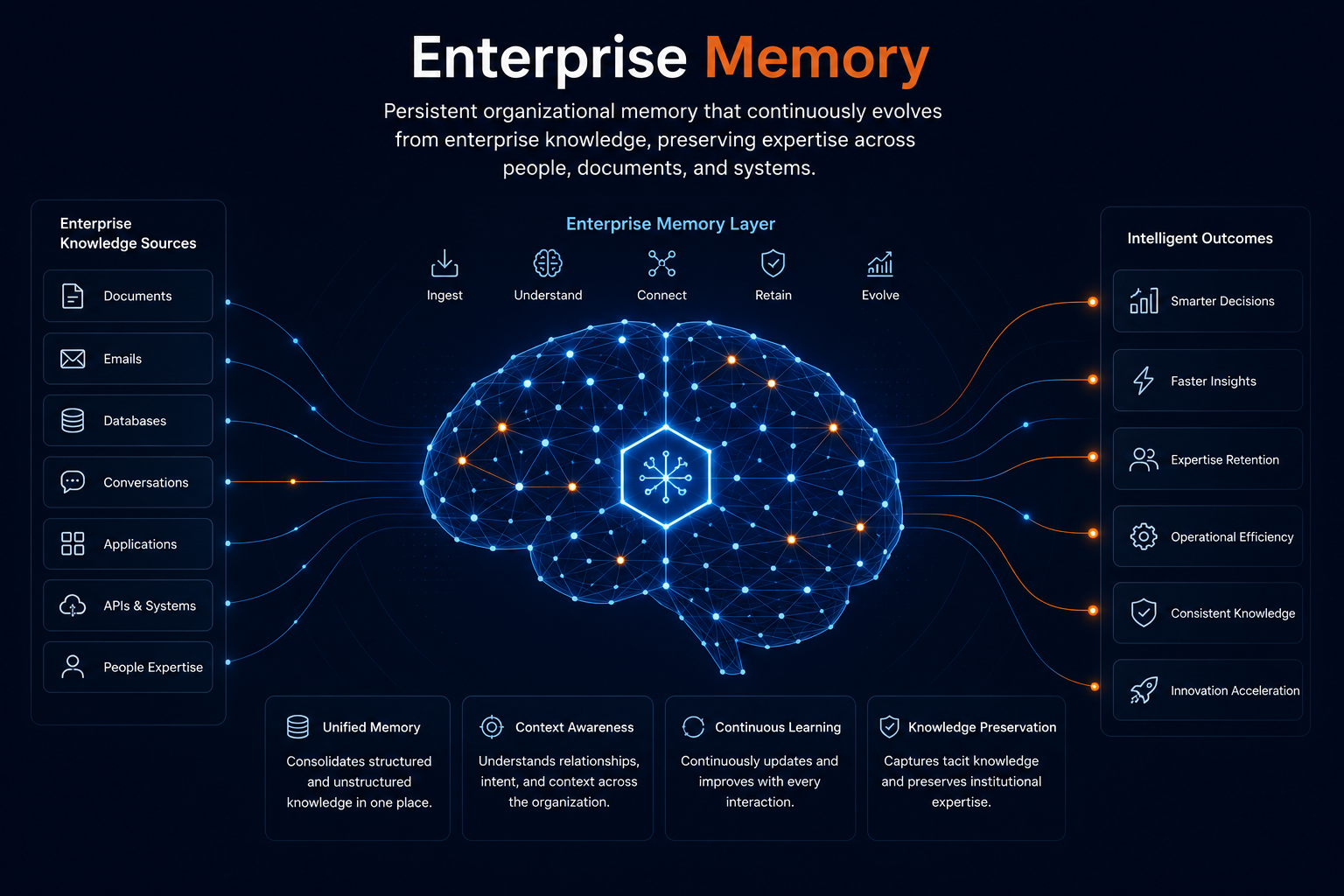
Problem: Siloed information and loss of institutional expertise
AI Concept: Knowledge Graphs & Neural Search
Creation: Intelligent Enterprise Memory Layer
Responsibility Check: Data Sovereignty & Contextual Accuracy
Diagram of an Enterprise Memory AI Knowledge Hub

Local-Language Information Assistant

Students design an assistant for useful community information while practising source verification, uncertainty statements and safe-response rules.

Problem: Information accessibility
AI Concept: NLP & LLMs
Creation: Custom Knowledge Assistant
Responsibility Check: Hallucination Check
Language assistant concept

From leadership alignment to student showcase in 90 days.

WEEKS 0–2

ALIGN

  • Leadership discovery meeting
  • Grade and cohort selection
  • Timetable and infrastructure review
  • Responsible-use guidelines
  • Teacher orientation
WEEKS 3–8

LEARN

  • Facilitated student learning
  • Age-appropriate AI laboratories
  • Reflection and verification tasks
  • Formative assessments
  • Teacher observation
WEEKS 9–11

BUILD

  • Team project development
  • Mentor feedback
  • Testing and red-teaming
  • Model-card preparation
  • Presentation coaching
WEEK 12

SHOWCASE

  • Student capstone presentations
  • Certificates
  • Parent and leadership engagement
  • School impact report
  • Scale-up recommendations

What the School Receives

Grade-appropriate student learning program
Structured facilitator-led sessions
Teacher AI-readiness orientation
School-leader strategy session
Parent AI-awareness orientation
One-year TensorCampus learning access
Student projects and capstone showcase
Completion certificates
Assessment rubric
School-level impact summary
Flagship Format

24 Guided Learning Hours

Supported by activities, assessment, project work and a final showcase.


Request a School-Specific Proposal

GLOBAL CLASSROOM PRACTICE

01

AI4K12

Five Big Ideas: perception, reasoning, learning, interaction and societal impact.

02

MIT RAISE / DAY OF AI

Age-banded, hands-on AI literacy, teacher learning and student voice.

03

EXPERIENCE AI

Data, models, bias, decision trees, model cards, careers and projects.

COMPETENCE, RESPONSIBILITY AND NATIONAL READINESS

04

UNESCO

Human-centred mindset, ethics, techniques and system design: Understand, Apply, Create.

05

EU DIGCOMP 3.0

Critical information use, content creation, safety, rights and problem solving.

06

CBSE + INDIAAI

CT and AI Classes 3-8; AI 417 pathways; data literacy, ethics, projects and FutureSkills.
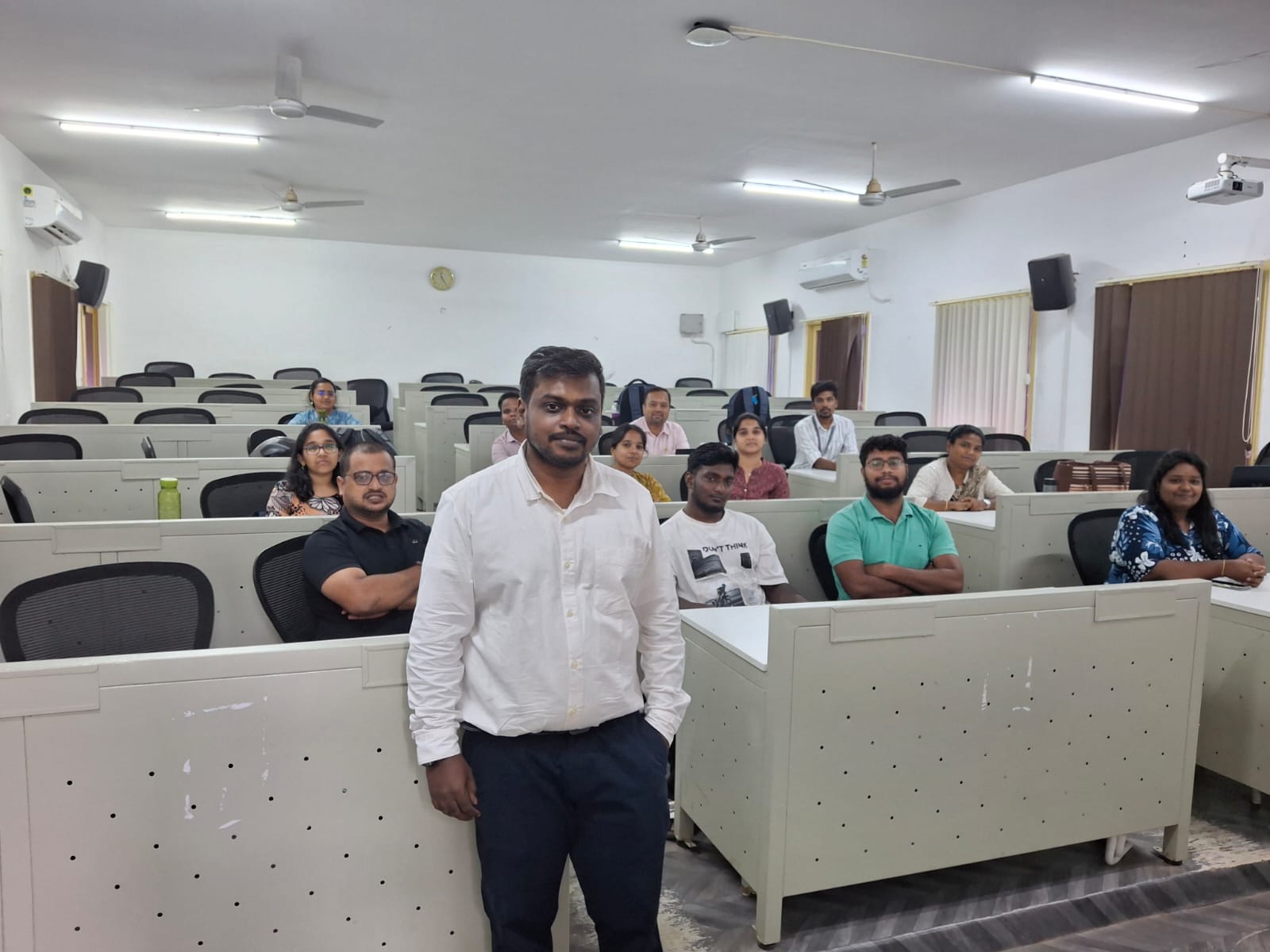
Ramkumar Manoharan

Ramkumar Manoharan

Founder and Director, TensorLearners Private Limited
Lead Mentor — AI, Generative AI and Agentic AI

Ramkumar Manoharan brings more than 18 years of experience across enterprise technology, analytics, data science, machine learning and applied artificial intelligence. He translates complex AI concepts into structured, engaging and responsible learning experiences for students, educators and institutions.

Credentials:

  • MBA, Indian Institute of Technology Madras
  • BE Mechanical Engineering, Government College of Technology, Coimbatore
  • Former Senior Data Scientist, AB InBev
  • Invited speaker at the Institution of Engineers Malaysia
  • Mentor and trainer across AI, Generative AI and Agentic AI
“AI education should develop judgement before dependence, and creativity before consumption.”

Prepare your students to understand, question and create with AI.

Start with a leadership conversation. We will help your school select the right grade pathway, implementation format and measurable outcomes.